Scientists store the human genome on a "memory crystal" that can last for billions of years
This ensures our genetic blueprint will survive in case of extinction — but do you think that is a good thing?
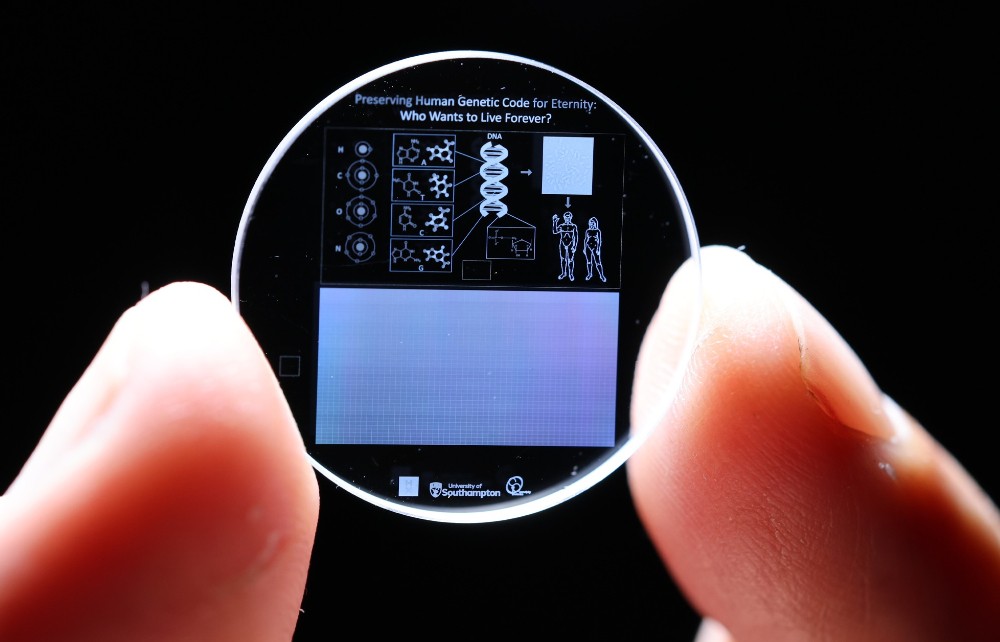
Scientists have successfully encoded the entire human genome onto a “5D memory crystal” that can theoretically last billions of years, ensuring the preservation of our genetic information even in the face of potential extinction.
This durable medium, developed by a research team led by Professor Peter Kazansky at the University of Southampton, can store 360 terabytes of data and withstand extreme conditions such as high temperatures, direct impacts, and cosmic radiation, making it the most resilient digital storage medium to date.
The crystal, capable of lasting up to 300 quintillion years at room temperature, utilizes ultra-fast lasers to etch the human genome into nanostructured silica, employing a technique that uses two optical dimensions and three spatial coordinates, termed “5D.”
Inspired by the Voyager mission’s Golden Records, the crystal also includes instructions for future civilizations on how to decode the information, featuring illustrations of human figures, DNA structure, and basic chemical elements.
While current technology cannot yet recreate complex organisms from this data, advancements in synthetic biology suggest that it may become possible in the future to generate artificial life forms from such stored genetic information.
The crystal, now stored in the Memory of Mankind archive in an Austrian salt mine, serves as a time capsule of human knowledge and genetic heritage, designed to survive long beyond any conceivable catastrophic events on Earth.


Comments
Post a Comment