Posts

Showing posts from June, 2025

New study shows EV batteries surpass gas cars in longevity

Image
A recent study has shown that electric vehicle (EV) batteries now outperform most gasoline-powered cars when it comes to lifespan. For many consumers considering the switch to EVs, EV battery lifespan has been a key concern. But fresh insights from over 10,000 vehicles suggest the concern may no longer be justified. EV batteries degrade slowly—but steadily Back in 2019, EV batteries were degrading at an average of 2.3% per year. In 2024, the updated analysis shows that rate has improved to just 1.8%. This significant improvement highlights how much battery technology has advanced in only a few years. At this rate, EV battery lifespan could exceed 20 years—longer than many gas vehicles stay on the road. EVs hold range longer than expected It’s a known fact that battery degradation causes EVs to lose range over time. However, with an average degradation of only 1.8% annually, most electric cars retain useful range for over a decade, making them ideal for long-term ownership or fle...

Apple iOS 26 just dropped a big upgrade — will your phone support it?

Image
Apple is skipping version numbers and going straight to iOS 26, and it’s not just a marketing move. The iOS 26 beta 2 release signals a shift toward syncing version numbers with calendar years — similar to car models — and packs in some serious upgrades. With a fall release expected, Apple is already letting users test-drive the latest features in the beta program. But will your iPhone be able to handle the leap? Liquid Glass: The redesign you can’t ignore Out of everything announced at WWDC this year, the new Liquid Glass design was the star of the show. Apple calls it a translucent material, but Liquid Glass is more than just a visual refresh. Home and lock screens now feature see-through apps and widgets that adjust based on your lighting environment. Floating buttons in apps like Phone and Maps also make the interface cleaner and more modern. Though comparisons to Windows Vista’s Aero style are floating around, this version feels more fluid — and yes, you can adjust the tran...

Chinese satellite 5x faster than Starlink with just a 2-watt laser — but experts raise doubts

Image
The Chinese satellite starlink comparison just became real. China’s Tiandu-1 satellite has reportedly achieved a major milestone in orbital mechanics. It entered a 3:1 Earth-moon resonant orbit, which means the satellite completes three loops around Earth for every one orbit of the moon — a configuration that could challenge Starlink’s legacy in orbital innovation. The Deep Space Exploration Laboratory , overseeing the mission, confirmed that Tiandu-1 executed a successful manoeuvre at perigee — its closest point to Earth — on May 22. As a result, it entered what they described as the world’s first round-trip 3:1 Earth-moon trajectory. The Tiandu-1 navigation test satellite successfully carried out a key manoeuvre at perigee on May 22 and precisely transitioned into a 3:1 Earth-moon resonant orbit. Testing future space infrastructure According to the lab, the data collected from this Chinese satellite will support future innovations in orbit control, autonomous navigation, and g...

Meta tried to lure OpenAI staff with huge bonuses, Altman says

Image
In a recent podcast appearance, OpenAI CEO Sam Altman revealed that Meta attempted to poach some of his company’s top AI engineers . The offers? Signing bonuses up to $100 million and even higher total compensation packages. Speaking on “Uncapped,” a podcast hosted by his brother, Altman said, “so far none of our best people have decided to take them up on that.” He noted that Meta sees OpenAI as a major competitor, especially as its own artificial intelligence efforts haven’t yielded the breakthroughs it hoped for. Why Meta is aggressively chasing AI leadership Meta CEO Mark Zuckerberg is reportedly assembling a top-tier AI team to lead its “superintelligence” lab. His company has poured enormous resources into Meta AI, the division behind its Llama series of open-source large language models. But there have been setbacks. Meta recently delayed the launch of its next-generation AI model, raising concerns about its current direction. Some reports suggest that frustration at the ex...

When Apple might launch iPhone 17 and iPhone 17 Pro

Image
Each year, Apple hosts a major keynote in early September to introduce new iPhones, and this year’s event is expected to confirm the iPhone 17 release date . Historically, this keynote falls on a Tuesday or Wednesday during the first half of the month, but never on September 11. This year, September 2–3 is unlikely due to Labor Day on September 1 and IFA Berlin (Sept. 5–9), which draws major media coverage. That leaves September 9 or 10 as the most likely dates, with September 8 also possible, based on past scheduling. My gut says it will be on Tuesday, Sept. 10 at 10 a.m. Pacific in Apple’s Cupertino HQ. Expected iPhone 17 and Pro Max release date Assuming the keynote is held on September 10, the iPhone 17 release date—and by extension, the apple iphone 17 pro max release date—is almost certainly Friday, September 18. This matches Apple’s usual pattern of releasing new iPhones the Friday following the keynote. Should Apple shift the keynote to the following week (starting Septem...

First mRNA lung cancer vaccine tested across seven countries

Image
Doctors have launched a global clinical trial of the world’s first mRNA lung cancer vaccine , marking a major milestone in cancer research. The vaccine, known as BNT116, is being developed by BioNTech and targets non-small cell lung cancer (NSCLC), the most common form of lung cancer. Lung cancer remains the leading cause of cancer deaths worldwide, responsible for about 1.8 million deaths each year. Survival rates are particularly low in patients with advanced or metastatic stages. “We are now entering this very exciting new era of mRNA-based immunotherapy clinical trials to investigate the treatment of lung cancer,” said Prof Siow Ming Lee, a consultant medical oncologist at University College London hospitals NHS foundation trust (UCLH). How the vaccine works BNT116 works similarly to the mRNA Covid-19 vaccines by teaching the immune system to recognize and destroy cancer cells. It delivers tumor-specific markers to the immune system, prompting it to attack cells showing these...

Japanese scientists develop a new transistor that could surpass silicon

Image
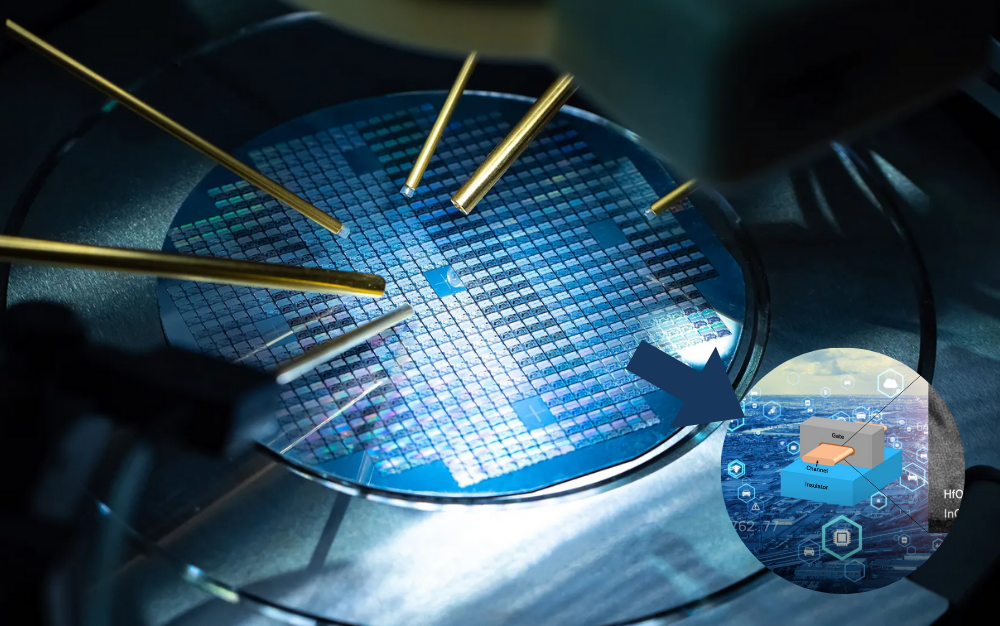
Transistors are among the most important inventions in modern technology. They power everything from smartphones to satellites. But as devices shrink, silicon-based transistors are reaching their physical limits. To tackle this challenge, Japanese scientists have developed a new transistor design that could change the future of electronics. Is this the end of the road for scaling electronics? A group of Japanese researchers from the Institute of Industrial Science at The University of Tokyo may have an answer. They've introduced a new kind of transistor made from gallium-doped indium oxide (InGaOx)—designed with a revolutionary gate-all-around structure. Why ditch silicon for indium oxide? “We also wanted our crystalline oxide transistor to feature a 'gate-all-around' structure, whereby the gate, which turns the current on or off, surrounds the channel where the current flows,” explains Anlan Chen, lead author of the study. This configuration allows for greater contr...

Say goodbye to recycling confusion with this AI trash bin

Image
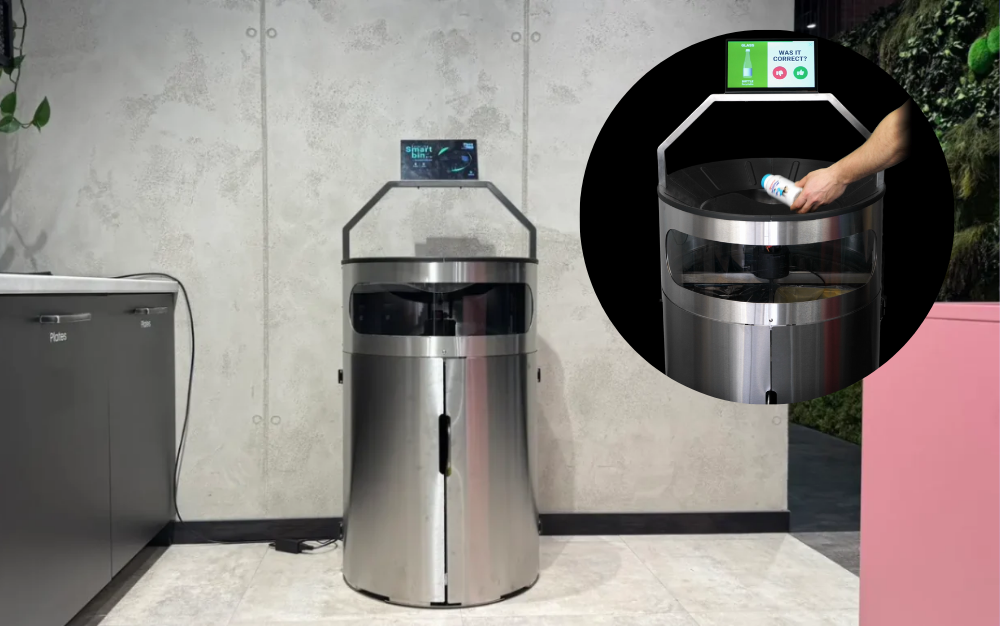
Is that plastic cup recyclable? What about that greasy pizza box? Even with the best intentions, many of us get it wrong. That's where Ameru comes in—an AI trash sorter that takes the guesswork out of waste disposal using the power of artificial intelligence. Ameru is a self-sorting smart bin that identifies and separates different types of waste for you. It uses AI and computer vision to recognize over 90 categories of trash—from plastics and paper to metals and organic materials—with more than 95% accuracy. Sorting waste has always been a challenging task, especially when it comes to knowing where each item should go. How Ameru's AI technology works Ameru is equipped with an HD 8MP camera that scans each item dropped into the bin. This camera helps the AI analyze the material and decide where it belongs. With its smart algorithm and clear imaging, you don’t need to guess what goes where. Ameru even gives you real-time feedback through a built-in touchscreen. That means...

Paradromics achieves breakthrough with first human brain implant

Image
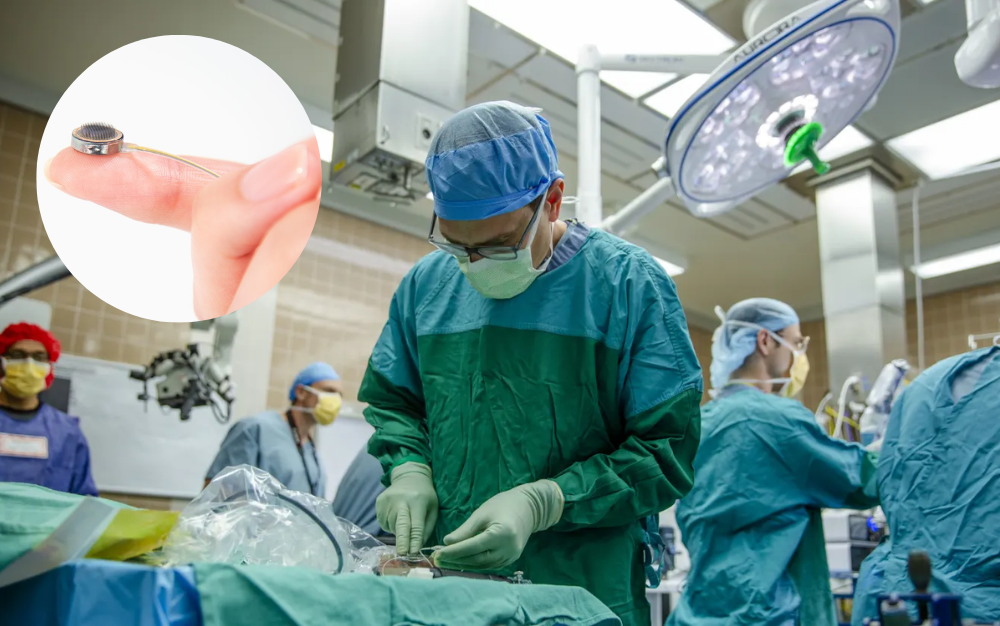
Neurotech startup Paradromics has reached a significant milestone by successfully implanting its brain-computer interface (BCI) system in a human for the first time . The Paradromics team conducted the procedure on May 14 at the University of Michigan, during a neurosurgery session for epilepsy treatment. Paradromics used this opportunity to implant and remove its device within a 20-minute window during the surgery. The trial run demonstrated that the Connexus Brain-Computer Interface can be implanted safely and effectively capture neural activity. A major step forward in brain-computer innovation Paradromics has been developing its BCI technology for nearly a decade. According to CEO Matt Angle, this first human implant is a leap forward that validates years of hard work. “We’ve shown in sheep that our device is best in class from a data and longevity standpoint, and now we’ve also shown that it’s compatible with humans,” Angle told CNBC. “That’s really exciting and raises a lot...

Tech giants say smartphones are dead — but is that true?

Image
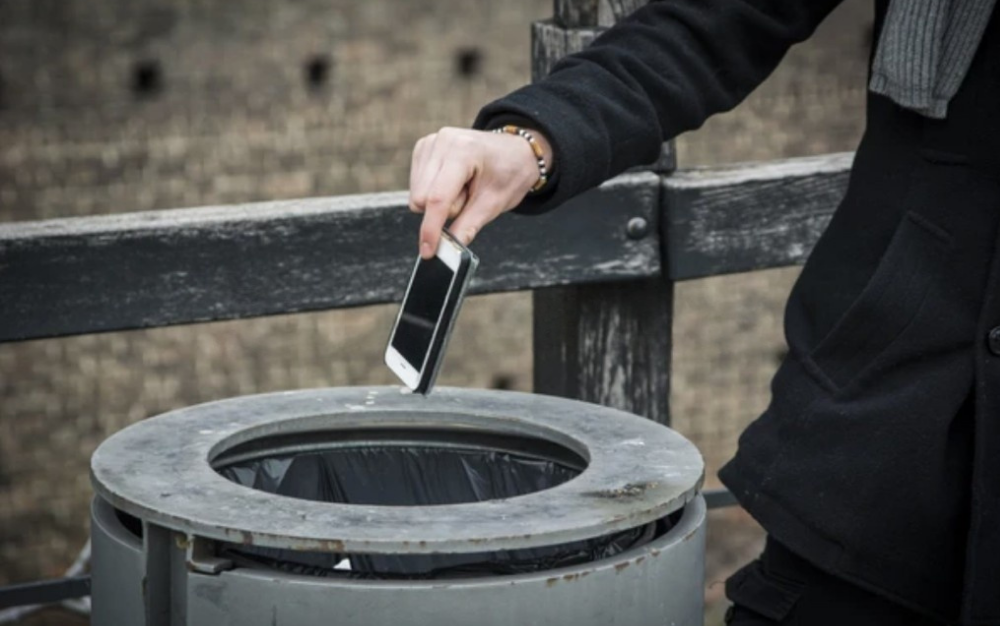
For years, big tech leaders have teased the “ death of the smartphone .” Elon Musk promotes Neuralink brain implants, Mark Zuckerberg pushes AR glasses, and even Bill Gates joins the chorus. But what’s really happening? Keith Shaw from Today in Tech sat down with IDC analyst Ramon Llamas to unpack whether smart glasses, AI devices, or wearables are ready to dethrone the smartphone . Spoiler: not quite yet. Tech visionaries have something to sell What always jumps out at me when people declare ‘the smartphone is dead’ is — who's saying it? Every single one of them has something else to sell. It’s a fair point. The hype often comes from those launching the next big thing. That doesn’t mean innovation isn’t real—it just means we should be cautious of over-promises. Smartphones are still selling in the billions According to Llamas, despite all the chatter, the smartphone market continues to move over a billion units annually. While the growth has slowed, the volume remains massi...

Breakthrough: 6G speed hits 938 Gbps in UCL test, 9000x faster than 5G

Image
6G speed just got real—at least in the lab. Researchers at University College London recently achieved experimental wireless speeds of 938 Gbps, which is about 9,000 times faster than the average real-world 5G speed in the UK (~100 Mbps). While these numbers are staggering, it’s important to note that the test was conducted under ideal lab conditions. Real-world results could be significantly lower. Still, “the experiment shows what’s possible when advanced electronics and photonics come together to maximize the spectrum”, the team said. Inside the technology: From 5 GHz to 150 GHz To hit those extreme speeds, the research team combined high-speed digital-to-analog converters and optoelectronic methods using lasers and photodiodes. The system covered a frequency range from 5 GHz up to 150 GHz, making use of both the W-band (75–110 GHz) and D-band (110–150 GHz). This wide coverage allowed them to use orthogonal frequency-division multiplexing (OFDM) and bit loading to transmit at...