Tesla sales decline globally amid rising competition
Tesla is experiencing an uncertain start to 2025, despite its past dominance in the electric vehicle (EV) market. Recent global sales data shows a substantial decline, reflecting growing competition, shifting customer preferences, and the impact of Elon Musk’s political involvement.
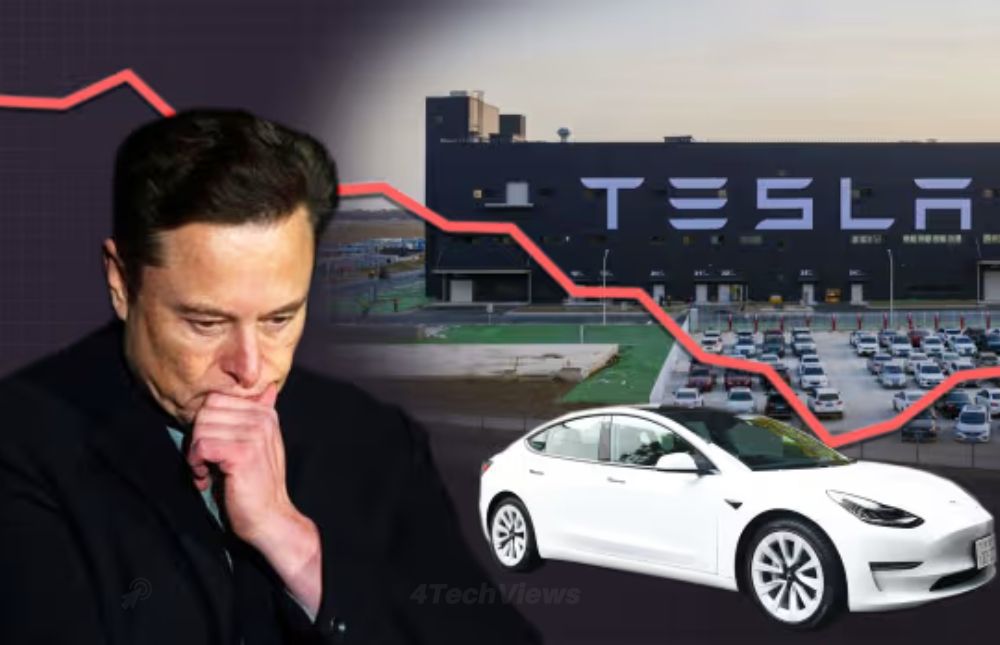 Tesla's decline in key markets
In California, Tesla's sales dropped by 11.6% in 2024, while other manufacturers saw growth. The Model 3, previously a best-seller, lost around 30,000 registrations. The much-anticipated Cybertruck pickup saw only 9,019 registrations across the state.
In Europe, Tesla’s performance has been particularly poor. Sales in Germany and France plummeted by 60% and 63%, respectively, in January 2024. The UK saw an 8% drop in Tesla registrations, even as EV sales penetration reached 21%. No Tesla models ranked among the top 10 best-selling cars in the UK. Meanwhile, in China, Tesla’s sales declined by 11.5% due to slowing production and intensified local competition.
Reasons behind Tesla’s sales decline
Several factors contribute to Tesla’s weakening market position. Competitors like Volkswagen, BMW, and Ford have introduced new EV models, targeting segments Tesla has yet to enter, such as three-row SUVs. Additionally, the end of government EV subsidies in key European markets has dampened demand.
However, the most critical challenge for Tesla may be Elon Musk’s increasing political controversies. His support for German far-right figures and U.S. political involvement has alienated Tesla’s traditionally progressive customer base. According to the EV Politics Project, Tesla’s shift under Musk has driven away more original customers than new conservative buyers are replacing.
The future of Tesla
Tesla’s upcoming Model Y refresh will play a crucial role in determining the company’s future. If Tesla fails to regain lost market share, Musk’s political controversies may prove to be more damaging than market competition or economic factors.
Tesla's decline in key markets
In California, Tesla's sales dropped by 11.6% in 2024, while other manufacturers saw growth. The Model 3, previously a best-seller, lost around 30,000 registrations. The much-anticipated Cybertruck pickup saw only 9,019 registrations across the state.
In Europe, Tesla’s performance has been particularly poor. Sales in Germany and France plummeted by 60% and 63%, respectively, in January 2024. The UK saw an 8% drop in Tesla registrations, even as EV sales penetration reached 21%. No Tesla models ranked among the top 10 best-selling cars in the UK. Meanwhile, in China, Tesla’s sales declined by 11.5% due to slowing production and intensified local competition.
Reasons behind Tesla’s sales decline
Several factors contribute to Tesla’s weakening market position. Competitors like Volkswagen, BMW, and Ford have introduced new EV models, targeting segments Tesla has yet to enter, such as three-row SUVs. Additionally, the end of government EV subsidies in key European markets has dampened demand.
However, the most critical challenge for Tesla may be Elon Musk’s increasing political controversies. His support for German far-right figures and U.S. political involvement has alienated Tesla’s traditionally progressive customer base. According to the EV Politics Project, Tesla’s shift under Musk has driven away more original customers than new conservative buyers are replacing.
The future of Tesla
Tesla’s upcoming Model Y refresh will play a crucial role in determining the company’s future. If Tesla fails to regain lost market share, Musk’s political controversies may prove to be more damaging than market competition or economic factors.
Tesla's decline in key markets
In California, Tesla's sales dropped by 11.6% in 2024, while other manufacturers saw growth. The Model 3, previously a best-seller, lost around 30,000 registrations. The much-anticipated Cybertruck pickup saw only 9,019 registrations across the state.
In Europe, Tesla’s performance has been particularly poor. Sales in Germany and France plummeted by 60% and 63%, respectively, in January 2024. The UK saw an 8% drop in Tesla registrations, even as EV sales penetration reached 21%. No Tesla models ranked among the top 10 best-selling cars in the UK. Meanwhile, in China, Tesla’s sales declined by 11.5% due to slowing production and intensified local competition.
Reasons behind Tesla’s sales decline
Several factors contribute to Tesla’s weakening market position. Competitors like Volkswagen, BMW, and Ford have introduced new EV models, targeting segments Tesla has yet to enter, such as three-row SUVs. Additionally, the end of government EV subsidies in key European markets has dampened demand.
However, the most critical challenge for Tesla may be Elon Musk’s increasing political controversies. His support for German far-right figures and U.S. political involvement has alienated Tesla’s traditionally progressive customer base. According to the EV Politics Project, Tesla’s shift under Musk has driven away more original customers than new conservative buyers are replacing.
The future of Tesla
Tesla’s upcoming Model Y refresh will play a crucial role in determining the company’s future. If Tesla fails to regain lost market share, Musk’s political controversies may prove to be more damaging than market competition or economic factors.


Comments
Post a Comment