Bill Gates says these three jobs won’t be taken over by AI—here’s why
AI is rapidly changing the way we work, automating repetitive tasks and allowing people to focus on higher-level responsibilities. However, this transformation is also causing widespread anxiety among workers. AI is reshaping the job market!
 A report revealed that in the 'worst case scenario,' eight million jobs in the UK could be lost to AI. Another study found that 54% of banking jobs could be automated.
Just last month, Singapore’s major bank DBS announced plans to cut around 4,000 positions over the next three years due to AI advancements. However, concerns over privacy and security in fields like banking are still slowing down widespread AI adoption.
Bill Gates’ perspective on AI and jobs
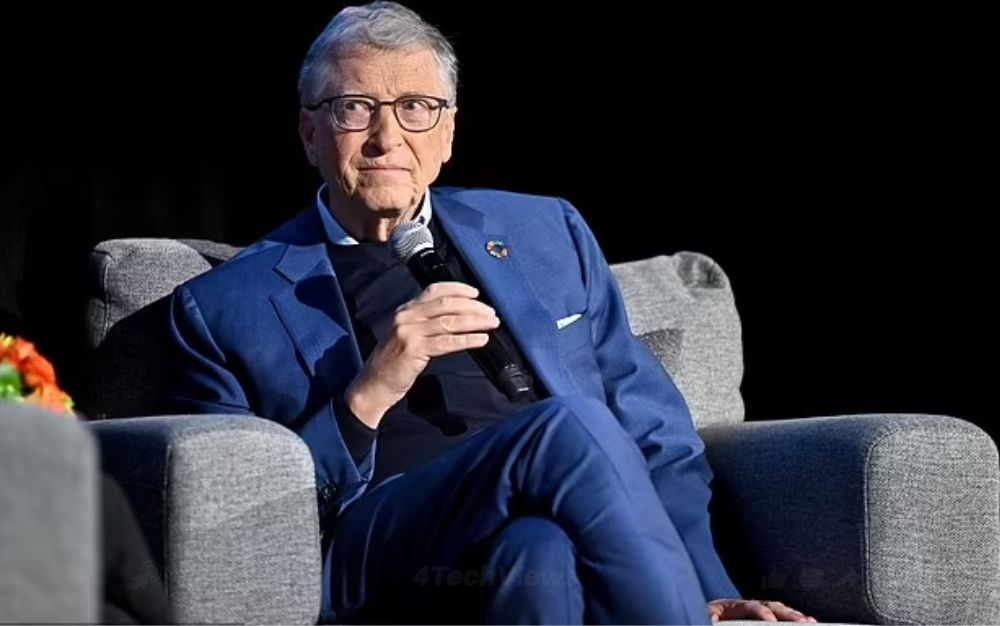
Microsoft co-founder Bill Gates recently shared his insights on AI’s impact on the job market. While he acknowledges that AI will replace humans in many areas, he believes it does not render people powerless. Instead, it is up to society to decide how AI is used and which tasks should remain under human control.
AI is evolving fast—and within 10 years, it will replace many doctors and teachers.
Gates’ predictions align with his broader vision of AI’s future. In a recent interview with Jimmy Fallon on NBC’s "The Tonight Show," he stated that within the next decade, AI will make human involvement unnecessary in most tasks.
"With AI, over the next decade, that will become free, commonplace—great medical advice, great tutoring," he said. He described this shift as entering an era of "free intelligence," where AI-powered solutions will be widely accessible, from healthcare to education.
This transition is already happening. AI is being used to improve medical diagnoses, develop new treatments, and provide virtual tutors for students worldwide. However, this rapid development also raises concerns. Gates has called AI’s growth "profound and even a little bit scary" because it’s advancing at an unpredictable pace.
Not everyone agrees on how AI will affect the job market. Some believe it will make workers more efficient rather than fully replacing them.
Others, like Microsoft AI CEO Mustafa Suleyman, argue that AI will drastically alter most industries, leading to widespread job displacement. In his book, "The Coming Wave" (2023), Suleyman warned that AI will initially augment human intelligence but ultimately replace many jobs.
With this in mind, Bill Gates believes these three jobs are safe from AI takeover: coders, biologists, and energy experts.
Why coders are still needed
Gates’ statement may seem surprising, as some industry leaders have expressed the opposite view. NVIDIA CEO Jensen Huang recently advised young people to reconsider entering software development due to AI’s rapid evolution.
Similarly, Salesforce CEO Marc Benioff stated that his company is debating whether to hire software engineers in 2025.
OpenAI CEO Sam Altman has also predicted that AI will eventually replace software engineers, urging students learn how to "master AI tools" just as his generation did with coding.
However, Gates argues that while AI can generate code and pass technical benchmarks (such as OpenAI’s O1 reasoning model), human coders remain essential. According to Gates, professionals are still needed to identify and correct errors, refine algorithms, and guide AI’s development.
The role of biologists in an AI-driven future
Gates also asserts that biologists will remain indispensable. While AI can diagnose diseases and analyze DNA, it lacks the creativity necessary for groundbreaking biological research and scientific discovery. Human expertise is crucial in pushing the boundaries of medical and genetic advancements.
Energy experts are irreplaceable
Additionally, Gates believes AI will assist rather than replace professionals working in the energy sector. The field is too complex to be fully automated, requiring human oversight to address global climate challenges.
Despite advancements in AI and clean technology, Gates remains skeptical about meeting global climate targets by 2050.
"I worry, in general, that the amount of green electricity that we need for the transition is not going to show up nearly as fast as we need," he explained. "If you try to map out and say: 'Let's get to zero by 2050,' you're like: 'Another 10 or 15 years might be more realistic.' It’s very hard to see. We're not going to get to zero by 2050, I don't think."
A report revealed that in the 'worst case scenario,' eight million jobs in the UK could be lost to AI. Another study found that 54% of banking jobs could be automated.
Just last month, Singapore’s major bank DBS announced plans to cut around 4,000 positions over the next three years due to AI advancements. However, concerns over privacy and security in fields like banking are still slowing down widespread AI adoption.
Bill Gates’ perspective on AI and jobs
Microsoft co-founder Bill Gates recently shared his insights on AI’s impact on the job market. While he acknowledges that AI will replace humans in many areas, he believes it does not render people powerless. Instead, it is up to society to decide how AI is used and which tasks should remain under human control.
AI is evolving fast—and within 10 years, it will replace many doctors and teachers.
Gates’ predictions align with his broader vision of AI’s future. In a recent interview with Jimmy Fallon on NBC’s "The Tonight Show," he stated that within the next decade, AI will make human involvement unnecessary in most tasks.
"With AI, over the next decade, that will become free, commonplace—great medical advice, great tutoring," he said. He described this shift as entering an era of "free intelligence," where AI-powered solutions will be widely accessible, from healthcare to education.
This transition is already happening. AI is being used to improve medical diagnoses, develop new treatments, and provide virtual tutors for students worldwide. However, this rapid development also raises concerns. Gates has called AI’s growth "profound and even a little bit scary" because it’s advancing at an unpredictable pace.
Not everyone agrees on how AI will affect the job market. Some believe it will make workers more efficient rather than fully replacing them.
Others, like Microsoft AI CEO Mustafa Suleyman, argue that AI will drastically alter most industries, leading to widespread job displacement. In his book, "The Coming Wave" (2023), Suleyman warned that AI will initially augment human intelligence but ultimately replace many jobs.
With this in mind, Bill Gates believes these three jobs are safe from AI takeover: coders, biologists, and energy experts.
Why coders are still needed
Gates’ statement may seem surprising, as some industry leaders have expressed the opposite view. NVIDIA CEO Jensen Huang recently advised young people to reconsider entering software development due to AI’s rapid evolution.
Similarly, Salesforce CEO Marc Benioff stated that his company is debating whether to hire software engineers in 2025.
OpenAI CEO Sam Altman has also predicted that AI will eventually replace software engineers, urging students learn how to "master AI tools" just as his generation did with coding.
However, Gates argues that while AI can generate code and pass technical benchmarks (such as OpenAI’s O1 reasoning model), human coders remain essential. According to Gates, professionals are still needed to identify and correct errors, refine algorithms, and guide AI’s development.
The role of biologists in an AI-driven future
Gates also asserts that biologists will remain indispensable. While AI can diagnose diseases and analyze DNA, it lacks the creativity necessary for groundbreaking biological research and scientific discovery. Human expertise is crucial in pushing the boundaries of medical and genetic advancements.
Energy experts are irreplaceable
Additionally, Gates believes AI will assist rather than replace professionals working in the energy sector. The field is too complex to be fully automated, requiring human oversight to address global climate challenges.
Despite advancements in AI and clean technology, Gates remains skeptical about meeting global climate targets by 2050.
"I worry, in general, that the amount of green electricity that we need for the transition is not going to show up nearly as fast as we need," he explained. "If you try to map out and say: 'Let's get to zero by 2050,' you're like: 'Another 10 or 15 years might be more realistic.' It’s very hard to see. We're not going to get to zero by 2050, I don't think."
A report revealed that in the 'worst case scenario,' eight million jobs in the UK could be lost to AI. Another study found that 54% of banking jobs could be automated.
Just last month, Singapore’s major bank DBS announced plans to cut around 4,000 positions over the next three years due to AI advancements. However, concerns over privacy and security in fields like banking are still slowing down widespread AI adoption.
Bill Gates’ perspective on AI and jobs
Microsoft co-founder Bill Gates recently shared his insights on AI’s impact on the job market. While he acknowledges that AI will replace humans in many areas, he believes it does not render people powerless. Instead, it is up to society to decide how AI is used and which tasks should remain under human control.
AI is evolving fast—and within 10 years, it will replace many doctors and teachers.
Gates’ predictions align with his broader vision of AI’s future. In a recent interview with Jimmy Fallon on NBC’s "The Tonight Show," he stated that within the next decade, AI will make human involvement unnecessary in most tasks.
"With AI, over the next decade, that will become free, commonplace—great medical advice, great tutoring," he said. He described this shift as entering an era of "free intelligence," where AI-powered solutions will be widely accessible, from healthcare to education.
This transition is already happening. AI is being used to improve medical diagnoses, develop new treatments, and provide virtual tutors for students worldwide. However, this rapid development also raises concerns. Gates has called AI’s growth "profound and even a little bit scary" because it’s advancing at an unpredictable pace.
Not everyone agrees on how AI will affect the job market. Some believe it will make workers more efficient rather than fully replacing them.
Others, like Microsoft AI CEO Mustafa Suleyman, argue that AI will drastically alter most industries, leading to widespread job displacement. In his book, "The Coming Wave" (2023), Suleyman warned that AI will initially augment human intelligence but ultimately replace many jobs.
With this in mind, Bill Gates believes these three jobs are safe from AI takeover: coders, biologists, and energy experts.
Why coders are still needed
Gates’ statement may seem surprising, as some industry leaders have expressed the opposite view. NVIDIA CEO Jensen Huang recently advised young people to reconsider entering software development due to AI’s rapid evolution.
Similarly, Salesforce CEO Marc Benioff stated that his company is debating whether to hire software engineers in 2025.
OpenAI CEO Sam Altman has also predicted that AI will eventually replace software engineers, urging students learn how to "master AI tools" just as his generation did with coding.
However, Gates argues that while AI can generate code and pass technical benchmarks (such as OpenAI’s O1 reasoning model), human coders remain essential. According to Gates, professionals are still needed to identify and correct errors, refine algorithms, and guide AI’s development.
The role of biologists in an AI-driven future
Gates also asserts that biologists will remain indispensable. While AI can diagnose diseases and analyze DNA, it lacks the creativity necessary for groundbreaking biological research and scientific discovery. Human expertise is crucial in pushing the boundaries of medical and genetic advancements.
Energy experts are irreplaceable
Additionally, Gates believes AI will assist rather than replace professionals working in the energy sector. The field is too complex to be fully automated, requiring human oversight to address global climate challenges.
Despite advancements in AI and clean technology, Gates remains skeptical about meeting global climate targets by 2050.
"I worry, in general, that the amount of green electricity that we need for the transition is not going to show up nearly as fast as we need," he explained. "If you try to map out and say: 'Let's get to zero by 2050,' you're like: 'Another 10 or 15 years might be more realistic.' It’s very hard to see. We're not going to get to zero by 2050, I don't think."


Comments
Post a Comment