Turning heat into power: New cement could help buildings generate power with 10x efficiency
Think cement is just for sidewalks? Think again. This new cement electricity innovation can turn heat into usable energy—and it’s 10 times more efficient than anything before.

From gray slabs to green power
Researchers at Southeast University in China, led by Professor Zhou Yang, created a new material: a cement-hydrogel composite. It’s inspired by the layered structure found inside plant stems. These natural layers help move heat and ions efficiently. So, scientists mimicked this with layers of traditional cement and polyvinyl alcohol (PVA) hydrogel.
“The biomimetic structure and interfacial selective immobilization mechanism may pave the way for the design and fabrication of high-performance ionic thermoelectric materials.”
Why this matters
Unlike regular cement, this material doesn’t just sit there. It generates electricity and stores it. Yes, you read that right—your future driveway could charge your phone.
Moreover, its performance is groundbreaking. The Seebeck coefficient hits −40.5 mV/K. The figure of merit (ZT) clocks in at 6.6×10⁻². That’s ten times higher than traditional cement-based thermoelectric materials.
“The disparity in diffusion rate between cations and anions within cement pore solution due to variations in interactions with pore walls endows cement with inherent ionic thermoelectric properties.”
How it works: Layers that unlock electricity
Cement already has a weak ability to generate electricity through the ionic thermoelectric effect. However, its dense structure blocks ion movement, which limits power output.
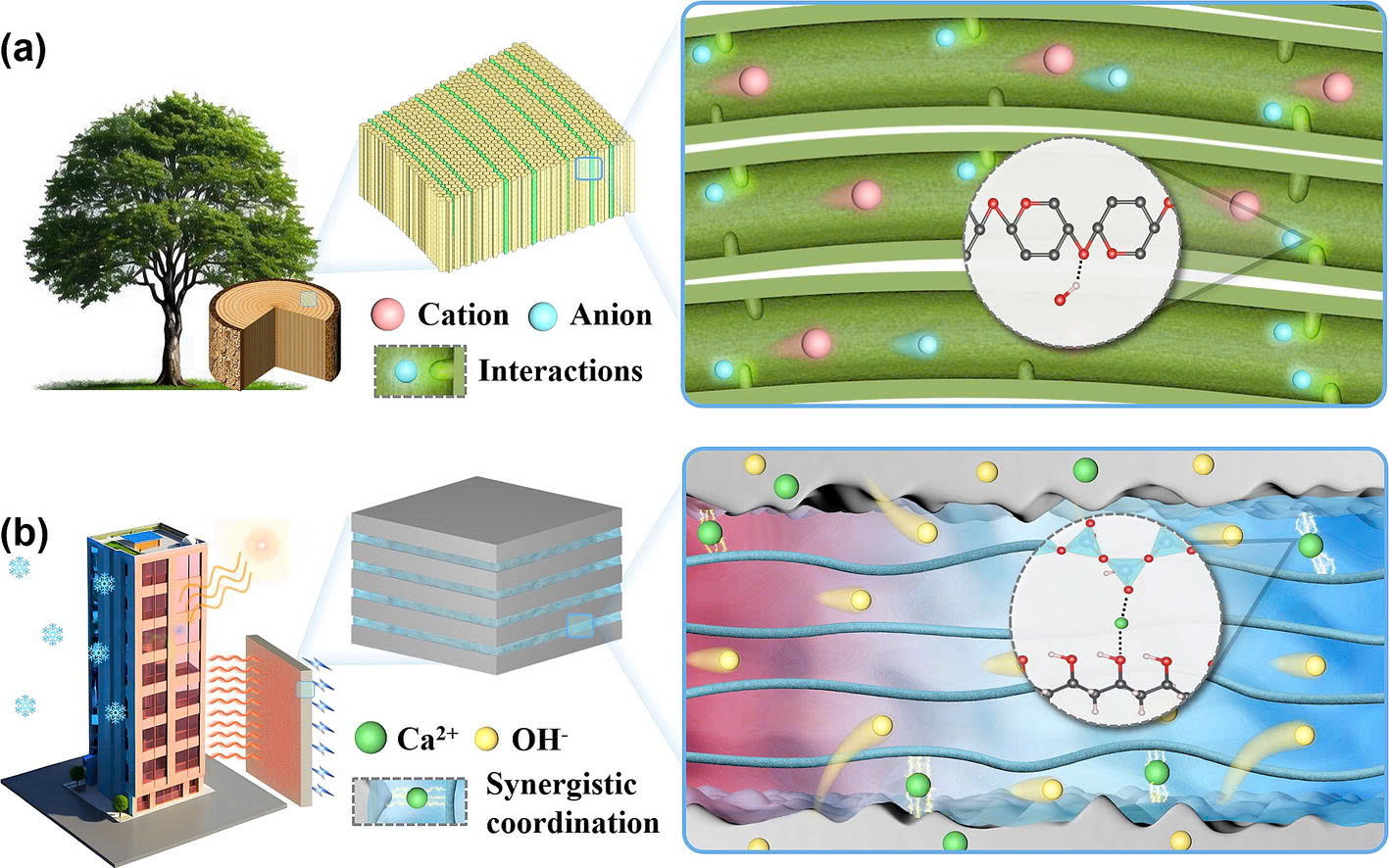
To overcome this, the research team built a multilayer design. It alternates layers of cement and hydrogel. The hydrogel acts as a fast path for hydroxide ions (OH⁻). At the same time, the interfaces are engineered to bond strongly with calcium ions (Ca²⁺) and more weakly with OH⁻. This intentional imbalance increases ion mobility differences—and significantly boosts the thermoelectric effect.
Powering smart infrastructure with cement electricity
What’s really exciting is the potential. For example, imagine smart buildings, bridges, or roads made with this material. They could power their own embedded sensors or even wireless communication tools.
“The CPC’s multilayer structure creates numerous interfaces, offering plenty of interaction sites that enhance the role of cement ions in boosting thermoelectric performance.”
As a result, we could see more efficient energy use in construction and far less dependency on external power sources. It’s a big win for smart infrastructure—and for sustainability.
Sustainable building with a tech twist
Cement production is one of the top contributors to carbon emissions. However, smart tweaks like this can flip the script.
At the SynBioBeta Global Synthetic Biology Conference, experts discussed reducing concrete-related emissions. One panel, “Conquering Carbon Emissions From the Concrete Industry,” highlighted how innovations like cement electricity could reshape the future of green building.
The future is electric—and cemented
With smart cities on the rise, innovations like this one aren’t just exciting—they’re essential. Cement electricity technology might soon let sidewalks power streetlights and bridges monitor their own structural health.
In short, this is more than cement. It’s infrastructure with a brain.
More details: Bio-inspired thermoelectric cement


Comments
Post a Comment